A practical trauma-informed guide for organisations supporting clients, service users and communities.

Purpose
This guide has been developed as part of the Adversity, Trauma & Resilience (ATR) Workforce Development Project, delivered by Bradford Trident and funded by Public Health Bradford.
This guide’s purpose is to support organisations across Bradford and partner systems to take a trauma-informed, restorative approach to staff wellbeing, particularly within services that provide direct support to clients, service users, and communities. Restorative wellbeing refers to approaches that support staff to reflect, recover, and sustain their work over time.
Staff working in these roles are exposed to emotional labour, trauma, complex safeguarding responsibilities, and ongoing system pressures. Alongside this, many experience workload demands and limited time to reflect or recover, increasing the risk of vicarious trauma, burnout, and cumulative stress.
Sustaining compassionate, effective services requires a workforce that feels safe, supported, and able to reflect, not simply resilient.
This guide provides a practical framework and wellbeing “menu”, supporting organisations to embed restorative approaches at individual, team, and organisational levels. This guide is not a standalone policy or training programme. It is a practical framework to support organisations to strengthen existing approaches to staff wellbeing using trauma-informed and restorative principles.
What’s in this guide and what it offers:
| Individuals | Teams | Organisations |
|---|---|---|
| Reflection | Team wellbeing | Leadership |
| Boundaries | Peer support | Culture |
| Self-awareness | Supervision | Policies |
| Regulation | Restorative conversations | System change |
Policy and Evidence Alignment
→Policy and Evidence Alignment
This guide is aligned with:
- The Scottish National Trauma Training Framework / Trauma Transformation Programme
- The West Yorkshire Trauma-Informed Charter and Readiness Checklist
- Local learning from the West Yorkshire Listening Project (ATR Programme)
- Wider trauma-informed workforce principles across health, social care, and voluntary sectors
These frameworks emphasise psychological safety, reflective supervision, leadership responsibility, and workforce wellbeing as core components of trauma-informed systems.
Why Restorative Staff Wellbeing Matters
Trauma-informed practice is often focused on service users, but evidence shows that staff wellbeing and service quality are inseparable. Supporting staff wellbeing is linked to improved retention, reduced sickness absence, and better outcomes for service users.
Without appropriate support, staff may experience:
- vicarious trauma through exposure to distressing experiences
- burnout linked to sustained pressure and workload
- reduced capacity to provide relational, compassionate care
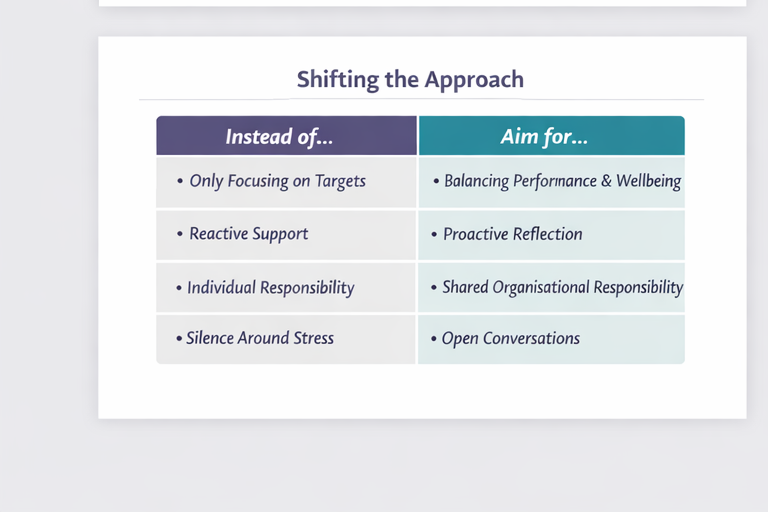
Restorative wellbeing shifts the focus from:
“coping” and individual resilience
to
organisational responsibility, reflection, and sustainable practice
A Trauma-Informed Understanding of Work and Wellbeing
This guide applies trauma-informed principles to the workforce context, recognising that staff:
- bring emotional investment and lived experience into their roles
- are affected by both what they are exposed to and how work is structured
- require opportunities to regulate, reflect, and recover
- benefit from supportive supervision, safe relationships, and realistic expectations
From Principles to Practice
A key aim of this guide is to move beyond why wellbeing matters and focus on how organisations can implement it in practice.
It includes:
- practical tools and templates for supervision, reflection, and team wellbeing
- structured approaches to restorative supervision and conversations
- guidance on crisis response, digital working, and workload pressures
- checklists and downloadable resources to support consistent implementation
These tools are designed to be flexible and adaptable, supporting organisations to embed wellbeing within existing structures rather than creating additional burden.
Intended Impact
This guide aims to:
- support organisations to embed trauma-informed wellbeing into everyday practice
- strengthen reflective and restorative supervision
- improve staff wellbeing, retention, and psychological safety
- enhance quality of care and relational practice
- provide a co-produced, locally relevant framework for Bradford
It is intended as a living document, shaped by ongoing engagement, feedback, and collaboration.
Approach and Next Steps
This guide is part of a wider Bradford-based commitment to improving workforce wellbeing through trauma-informed and restorative practice. It has been developed through a process of co-production, bringing together national evidence, local expertise, and the experiences of professionals working across Bradford.
The guide has been directly informed by:
- The Bradford Staff Wellbeing & Reflective Practice Survey, capturing the experiences of 57 professionals from health, local authority, education, housing and voluntary sector organisations.
- A multi-agency staff consultation and focus group, providing in-depth insight into the realities of emotionally demanding work and the practical support staff value most.
- Learning from the Adversity, Trauma & Resilience (ATR) Workforce Development Project, including workforce development, organisational support and partnership working across Bradford.
- National and regional trauma-informed guidance, ensuring the guide reflects current evidence and best practice.
By combining research evidence, quantitative survey data, and qualitative staff experiences, this guide reflects both what the evidence tells us and what Bradford’s workforce has told us they need.
As restorative wellbeing continues to develop across Bradford, this guide will remain a living resource, evolving through:
- ongoing workforce surveys and staff engagement
- continued focus groups and co-production
- feedback from organisations using the guide
- learning from local, regional and national trauma-informed initiatives
- the development of new tools, templates and practical resources
We are committed to ensuring this guide continues to reflect the voices, experiences and priorities of Bradford’s workforce. If you have feedback, examples of good practice, or suggestions for future editions, we’d love to hear from you.
atrproject@bradfordtrident.co.uk
Help us improve this guide by completing our short 3-minute evaluation.
Main Restorative and Wellbeing Guide
Please click on each of the headings with the arrow → to expand each section.
→How to Use this Guide
This guide has been designed as a practical resource that can be used in different ways depending on your role and organisation. You do not need to read it from beginning to end—use the sections most relevant to your needs and return to others as your practice develops.
Intended Audience
This guide is designed for organisations and teams working directly with clients, service users, and communities, including:
- senior leaders and commissioners
- managers and supervisors
- frontline practitioners
- HR, workforce development, and wellbeing leads
It recognises that staff wellbeing is a shared organisational responsibility, not solely an individual one.
The approaches in this guide are designed to be embedded within existing structures, rather than adding additional workload.
How Organisations Can Use This Guide
Organisations may use this guide to:
- review current approaches to staff wellbeing
- identify small, realistic changes that can be implemented
- strengthen supervision, leadership, and team support
- reflect on how workload, culture, and systems impact staff wellbeing
The guide can be used:
- as a whole organisational framework
- within specific teams or services
- alongside existing wellbeing or workforce strategies
Purpose in Practice
This document is not a prescriptive policy or one-size-fits-all model.
Instead, it is a practical framework and restorative wellbeing menu that organisations can adapt to their context.
It is intended to:
- support trauma-informed workforce practice
- strengthen restorative and reflective supervision
- embed wellbeing into everyday organisational culture
- complement existing policies, systems, and structures
If you are an Individual Practitioner
You may find these sections particularly helpful:
- Section 3 – Understanding the Challenges – recognising the impact of emotionally demanding work.
- Section 4 – Restorative Strategies – practical approaches to support your own wellbeing.
- Section 4.4 – Restorative & Clinical Supervision – making the most of supervision and reflective practice.
- Section 7 – Vicarious Trauma, Burnout & Workload Pressure – recognising signs and knowing when to seek support.
- Section 12 – Resources – local and national support, guidance and further reading.
If you are a Manager or Team Leader
You may wish to focus on:
- Section 4.4– Restorative & Clinical Supervision – creating reflective, psychologically safe supervision.
- Section 5 – Leadership & Shared Responsibility – supporting staff through trauma-informed leadership.
- Section 6 – Becoming a Trauma-Informed Organisation – embedding restorative approaches within teams and services.
- Section 8 – Tools & Templates – practical resources for supervision, team meetings and reflective conversations.
- Section 9 – Crisis Response – responding supportively when staff are experiencing stress or burnout.
- Section 10 – Measuring Impact – monitoring staff wellbeing and evaluating progress.
If you are an Organisational Leader, Commissioner or Workforce Lead
You may find these sections most useful:
- Section 5 – Leadership & Shared Responsibility
- Section 6 – Becoming a Trauma-Informed Organisation
- Section 8 – Tools & Templates
- Section 10 – Measuring Impact
- Section 11 – Trauma-Informed Use of Technology
- Section 12 – Resources
These sections focus on creating psychologically safe organisations, embedding restorative practice into everyday systems, and supporting sustainable workforce wellbeing across services.
Downloadable Tools and Resources
Throughout the guide you will find practical templates, checklists and reflective tools that can be adapted for your organisation, including:
- Restorative Supervision Framework → See Section 4.4
- Weekly Reflection Prompts → See Section 8.3
- Team Wellbeing Check-In → See Section 8.3
- Post-Incident Debrief → See Section 8.3
- Team Recognition Prompt → See Section 8.3
- Keep It – Fix It – Ditch It Team Reflection Exercise → See Section 8.3
- Measuring Wellbeing Checklist → See Section 10
- Digital Boundaries Checklist → See Section 11
- Further Reading & Local Resources → See Section 12
These resources are designed to complement existing supervision and wellbeing processes, helping organisations embed restorative approaches into everyday practice rather than creating additional work.
A Living Resource
This guide is intended to evolve alongside local learning and workforce experience. It has been informed by national evidence, local staff consultation, the Bradford Staff Wellbeing & Reflective Practice Survey, and the ongoing work of the Adversity, Trauma & Resilience (ATR) Workforce Development Project. New resources, tools and learning will be added over time to support organisations on their restorative wellbeing journey.
→1. Introduction & Purpose
This section outlines the purpose of the restorative wellbeing guide and its relevance to organisations supporting clients, service users, and communities. It sets the context for why staff wellbeing must be considered as part of trauma-informed practice, recognising that staff who feel supported, safe, and valued are better able to provide compassionate and sustainable care.
This guide provides practical, trauma-informed approaches to supporting staff wellbeing across organisations working with clients, service users, and communities. Restorative wellbeing refers to approaches that support staff to reflect, recover, and sustain their work over time.
Our staff are our biggest resource, and greatest asset. They build relationships with our clients that define the character and purpose of our organisation. They support people through some of their most challenging life experiences, often holding complex emotional stories alongside their everyday responsibilities.
But who looks after the staff? Who makes them feel cared for, supported, valued and heard?
A restorative approach to staff wellbeing is about creating a culture where staff feel psychologically safe, nurtured, and equipped to do their vital roles sustainably. It recognises that staff are not machines — they are people who bring their lived experiences, empathy, and emotional investment into their work.
The Scottish Trauma Training Framework highlights that trauma-informed systems must support both service users and the workforce. Staff working in direct-support roles are at increased risk of emotional load, secondary trauma, burnout, and cumulative stress. Without restorative structures, this impact can build over time and affect both wellbeing and service quality.
Local learning from the West Yorkshire Listening Project reinforces that feeling seen, heard, and supported is a protective factor. This applies equally to staff as it does to service users.
This guide aims to equip organisations with practical tools, policies, and approaches that restore energy, support emotional resilience, and sustain compassionate, trauma-informed practice. This is not about making staff tougher — it is about creating environments where they can replenish, reflect, and continue to provide high-quality care.
This guide is not a standalone policy or training programme. It is a practical framework to support organisations to strengthen existing approaches to staff wellbeing using trauma-informed and restorative principles. Organisations will be at different stages of readiness, and approaches should be adapted to context rather than applied as a single model.
How this guide was developed
This guide has been developed using a combination of research evidence, national guidance, local consultation, and workforce feedback to ensure it reflects both best practice and the experiences of professionals working across Bradford.
The content has been informed by:
- Current evidence and national guidance on trauma-informed practice, restorative approaches, workforce wellbeing, supervision, psychological safety, and organisational change.
- A multi-agency staff consultation and focus group, facilitated by the Adversity, Trauma and Resilience (ATR) Workforce Development Project, in December 2024, involving professionals from education, homelessness services, foster care, and services supporting children, young people and adults. The consultation explored experiences of supervision, emotional wellbeing, organisational culture, and the support needed to sustain trauma-informed practice. Key themes have been incorporated throughout this guide.
- The Bradford Staff Wellbeing & Reflective Practice Survey, completed by 57 professionals from health, local authority, education, housing, and voluntary sector organisations across Bradford. The survey explored staff wellbeing, supervision, reflective practice, workload, and the impact of emotionally demanding work. Local findings are highlighted throughout the guide to ensure recommendations reflect the priorities and experiences of Bradford’s workforce. The survey findings reported here are from March-July 2027, and the survey is still open and will serve to further inform this guide.
- Learning from the ATR Workforce Development Project, including workforce training, organisational development work, partnership working, and ongoing feedback from organisations embedding trauma-informed and restorative approaches.
Together, these sources ensure that the guide is evidence-informed, locally relevant, and co-produced with the workforce it is designed to support.
→2. Core Principles
This section explains the key trauma-informed principles that underpin restorative staff wellbeing, including safety, trust, reflection, and shared responsibility. These principles are important because they shift wellbeing from being an individual issue to a whole-system responsibility, aligning with the Scottish Trauma Training Framework’s emphasis on psychologically safe and supportive environments.
Wellbeing is a shared responsibility
Staff wellbeing is not solely an individual responsibility. The West Yorkshire Trauma-Informed Readiness Checklist emphasises that leadership, supervision, policies, and culture must all support trauma-informed practice and staff self-care opportunities. This means organisations, teams, and individuals all play a role in sustaining wellbeing.
Local Insight – Bradford Staff Wellbeing Survey (2026)
Staff consistently identified organisational factors as the greatest contributors to wellbeing. The highest-rated factors were:
- Feeling valued (92%)
- Work-life balance (91%)
- Manageable workload (81%)
- Supportive teams (81%)
- Supportive supervision (75%)
Proactive, not reactive
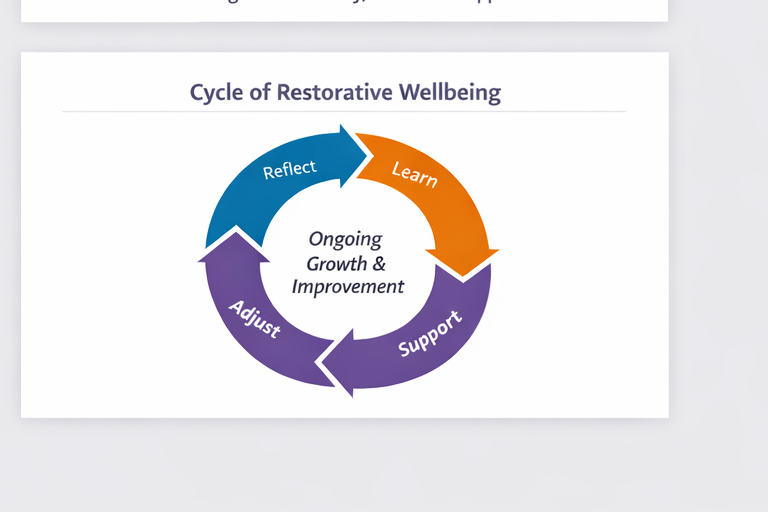
A trauma-informed approach focuses on prevention rather than crisis response. Supporting staff before burnout occurs — through supervision, reflection, and manageable workloads — is more effective than responding once difficulties escalate.
Psychological safety first
Psychological safety enables staff to speak openly about stress, mistakes, and emotional impact without fear of judgement. Many roles involve exposure to trauma, and without appropriate support this can impact staff wellbeing over time.
This aligns with Scottish Trauma Transformation principles of safety, trust, and collaboration.
Local Insight – Bradford Staff Wellbeing Survey
Survey respondents repeatedly described the importance of being able to ask for help, discuss emotional impact, and admit mistakes without fear of judgement. The prominence of supportive teams (81%) and feeling valued (92%) highlights psychological safety as a key protective factor.
Rest is part of the job
Rest and recovery are not rewards after work is completed; they are essential components of sustainable practice. Staff supporting trauma-affected individuals require time to regulate and process their experiences.
→3. Understanding the Challenges
This section explores the emotional and practical challenges faced by staff in client-facing and support roles, including emotional labour, workload pressures, and cumulative stress. Understanding these challenges is essential to ensure that wellbeing support is realistic, preventative, and responsive to the actual experiences of the workforce rather than assumptions.
Staff in 1:1 support roles face unique and often invisible pressures. These include:
- Emotional labour and compassion fatigue
- Exposure to trauma narratives and safeguarding concerns
- Blurred boundaries between work and personal life
- System pressures such as targets, paperwork, and service demand
- Isolation in lone-working or community roles
- Digital pressure and constant communication
The Listening Project is a regional initiative by the West Yorkshire Health and Care Partnership’s Adversity, Trauma, and Resilience (ATR) programme and it has found that emotional experiences become more difficult when there is limited time to process and reflect, and when systems become overly task-focused. For staff, this can lead to cumulative stress, emotional exhaustion, and reduced capacity to provide care and support to others.
Trauma-informed workforce practice recognises that the impact of the work is not only operational, but emotional and relational.
Local Insight – Bradford Staff Wellbeing Survey
Respondents described wellbeing challenges as cumulative rather than isolated. The most frequently reported barriers were:
- Emotional impact of the work (45%)
- High workload/caseload (43%)
- Lack of time to reflect or decompress (40%)
- Organisational pressures/targets (36%)
- Digital communication overload (30%)
→4. Restorative Strategies
This section outlines practical approaches that support staff to regulate, reflect, and sustain their wellbeing within demanding roles. It is important because restorative strategies move beyond reactive wellbeing initiatives and instead provide ongoing, structured support that reduces burnout and supports long-term workforce sustainability.
4.1 Individual-Level Support
This subsection focuses on support that empowers individual staff members to manage their wellbeing in a safe and supported way. It is important because trauma-informed practice recognises that individuals need time, space, and permission to reflect, regulate, and seek support without stigma or judgement.
Individual support should focus on regulation, reflection, and empowerment rather than resilience alone.
This may include:
- Regular wellbeing check-ins that allow staff to reflect safely
- Micro-breaks to support emotional regulation during demanding days (do they have a chance to step away & breathe, or are they straight into the next client?)
- Reflective practice opportunities (journals, facilitated reflection spaces)
- Peer-to-peer support systems to reduce isolation (a team to bounce ideas off)
- Training in trauma-informed practice and self-awareness
The Scottish framework highlights the importance of supporting staff to remain emotionally regulated and reflective in their roles, particularly when working with trauma.
Local Insight – Bradford Staff Wellbeing Survey
Many respondents of the survey emphasised that wellbeing support is only effective when staff have protected time to access it. Participants consistently referred to needing time for reflection, supervision, breaks and emotional recovery, with many describing support as available “in theory” but difficult to access in practice due to workload pressures.
4.2 Team-Level Support
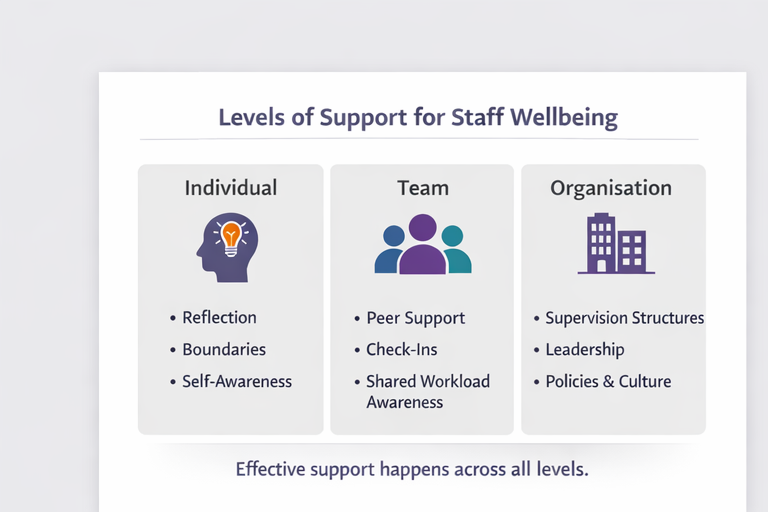
This subsection highlights the role of teams in creating a supportive and restorative working environment. Strong team culture, peer support, and reflective spaces are important protective factors that reduce isolation and help staff process the emotional impact of their work collectively.
Teams play a crucial role in restorative wellbeing. A supportive team culture can act as a protective factor against burnout and stress.
Effective team-level approaches include:
- Structured, non-blaming debriefs after complex or distressing cases
- Regular team wellbeing check-ins
- Reflective practice groups
- Open discussions about emotional impact of the work
- Shared workload awareness to prevent overload
The Listening Project emphasised that relational safety and consistent support environments significantly reduce distress — this applies equally within staff teams.
Local Insight – Bradford Staff Wellbeing Survey
Staff culture and peer relationships were among the strongest protective factors identified by respondents. 81% highlighted supportive teams as important to their wellbeing, with many describing informal check-ins, peer reflection and psychologically safe relationships as helping reduce isolation and emotional burden.
4.3 Regulate, Relate, Reason
The “Regulate, Relate, Reason” model, developed by Dr Bruce Perry, explains the sequence the brain follows under stress. Drawing from neuroscience and trauma research, the model recognises that when a person is overwhelmed, anxious, or emotionally dysregulated, their thinking brain becomes less accessible.
In these moments, individuals cannot immediately reflect, problem-solve, or perform at their best. Instead, they need to regulate first, then feel relationally supported, before they are able to reason.
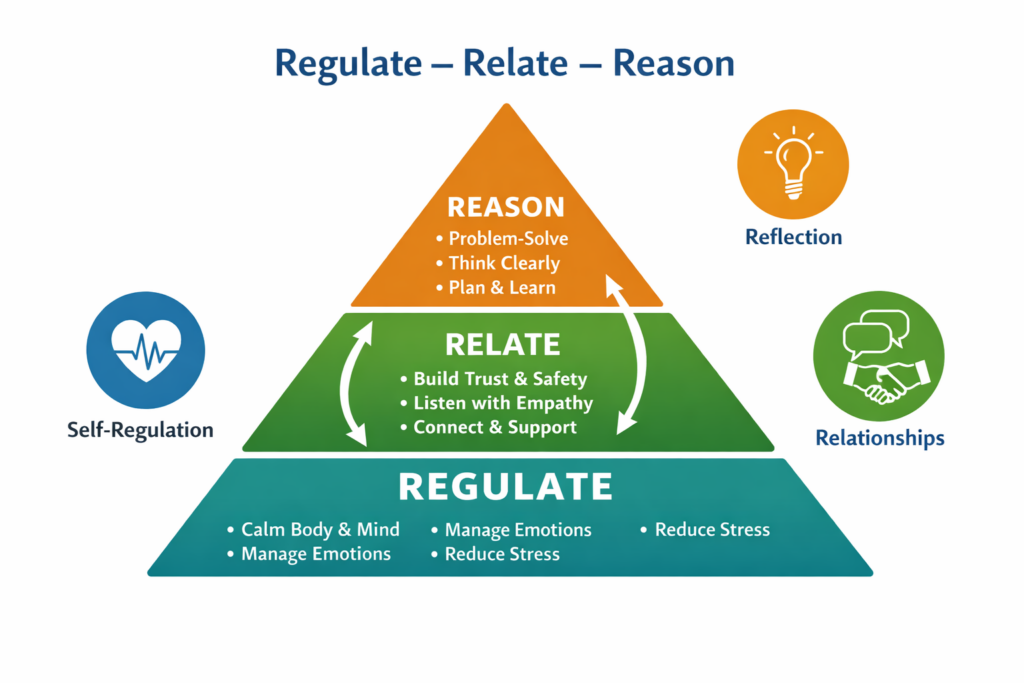
While often used in direct work with children and young people, this model is equally relevant for staff working in emotionally demanding roles. Professionals supporting trauma-affected individuals are regularly exposed to distressing situations, high emotional labour, and cumulative stress. Applying a “Regulate, Relate, Reason” approach within supervision and organisational culture recognises that staff also need space to regulate and feel relationally supported before they can reflect effectively on practice.
You can read more about these theories here
In a workforce context, this may include:
- Beginning supervision or meetings with a brief wellbeing check-in (Regulate)
- Creating psychologically safe and supportive conversations where staff feel listened to (Relate)
- Moving into reflection, learning, and problem-solving once staff feel settled and supported (Reason)
In practice, this means:
- Regulate: Supporting the person (or yourself) to feel calm and safe through grounding, breathing, pauses, or reduced pressure
- Relate: Reconnecting through empathy, attunement, and feeling heard and understood
- Reason: Once calm and supported, moving into reflection, problem-solving, planning, and learning
This sequence protects against overwhelm and supports trauma-informed communication. While often used in client-facing practice, it is equally relevant for staff working in emotionally demanding roles. Supervision, team culture, and leadership approaches that allow time for regulation and relational support before performance discussions help reduce stress and support sustainable practice.
This approach aligns closely with trauma-informed principles outlined in the Scottish Trauma Training Framework, particularly safety, trust, and reflective practice. It also supports restorative wellbeing by acknowledging that emotional regulation and supportive relationships are essential foundations for sustainable practice, rather than expecting staff to immediately “reason” or perform under stress.
Embedding this model within supervision, team culture, and leadership practice helps organisations respond more compassionately to stress, prevent burnout, and create environments where staff can process the impact of their work in a safe and structured way.
4.4 Supervision- Restorative and Clinical Elements
Supportive supervision is a key component of restorative wellbeing and trauma-informed workforce practice. The Scottish Trauma Training Framework recognises supervision as a protective factor that supports staff to process the emotional impact of their work, maintain professional boundaries, and sustain compassionate practice.
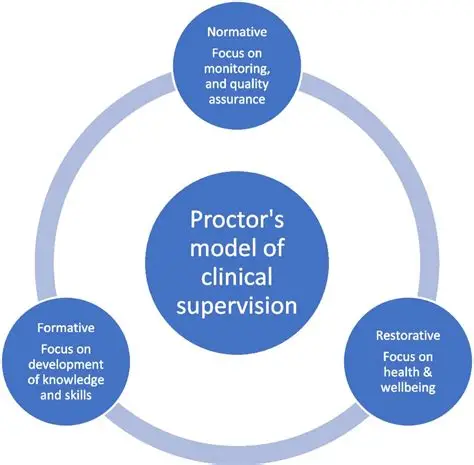
Proctor’s model of supervision provides a structured and balanced approach through three core functions:
- Normative – This focuses on the managerial and organisational aspects of practice, including safeguarding, professional standards, mandatory training, and accountability. It helps ensure staff are working safely, ethically, and within clear expectations.
- Formative – This focuses on professional development, learning, and reflective practice. It supports staff to build knowledge, develop skills, and increase self-awareness in their work with clients, service users, and communities.
- Restorative – This focuses on emotional support, wellbeing, and preventing burnout. It provides a safe space for staff to reflect on the emotional demands of their role, manage stress, and feel supported rather than judged.
Supervision can take place through one-to-one sessions, peer group supervision, or a blended approach depending on organisational context and staff needs.
Effective supportive supervision should:
- Establish clear boundaries and expectations
- Promote safe and trusting relationships
- Support safeguarding awareness and professional accountability
- Encourage staff growth and development
- Be individualised and consistent
- Respect staff time and workload pressures
- Support flexible working where appropriate
- Use a variety of reflective and restorative methodologies
This approach also reflects restorative practice principles, which emphasise safe dialogue, mutual understanding, and shared responsibility in workplace relationships, helping to strengthen trust, communication, and psychological safety within teams.
Restorative supervision focuses on repair, renewal, and emotional processing for staff who support others. It recognises that staff are regularly exposed to emotional labour and require space to reflect on the impact of their work, not just complete tasks or meet targets.
This approach draws strongly on Proctor’s model of supervision, which includes:
- Normative: Managerial and safeguarding responsibilities, policies, and professional standards
- Formative: Learning, professional development, and reflective practice
- Restorative: Emotional support, stress management, and prevention of burnout
Restorative supervision is not separate from operational supervision; rather, it ensures that emotional wellbeing and reflective practice are embedded alongside performance and casework discussions. It may take place through one-to-one supervision, peer group supervision, or a blended model depending on organisational context.
Restorative supervision focuses on repair, renewal, and emotional processing for staff who support others. It recognises that staff are regularly exposed to emotional labour and require space to reflect on the impact of their work, not just complete tasks or meet targets.
Key restorative elements include:
- Space to reflect emotionally, not just operationally
- Processing the impact of the work on the worker
- Recharging to sustain compassion and avoid burnout
- Establishing safe relationships and professional boundaries
- Supporting staff growth and development in a consistent and individualised way
Although Proctor’s restorative function is distinct from the brain-based “Regulate, Relate, Reason” model, the principles overlap in prioritising emotional safety, reflection, and support before performance expectations.
Local Insight – Bradford Staff Wellbeing Survey
While 63% of respondents or the survey reported access to supportive supervision, experiences varied considerably.
- 19% did not feel they had supportive supervision.
- 12% reported receiving no regular supervision.
- Only 5% said supervision primarily focused on emotional reflection and wellbeing.
- 21% said supervision focused mainly on operational casework.
These findings suggest that although supervision is widely available, reflective and restorative supervision remains inconsistent.
4.4.1 Clinical Supervision
4.4.2 How Clinical and Restorative Supervision Work Together
Clinical supervision and restorative supervision are not separate or competing approaches — they are complementary.
- Clinical supervision focuses on what staff are doing (practice, risk, decisions)
- Restorative supervision focuses on how the work is affecting them (emotional impact, wellbeing, reflection)
In practice, organisations may:
- integrate both within one supervision session, or
- offer them separately, depending on role and structure
What matters is that both functions are present
Staff need space to:
- think clearly about their work
- process the emotional impact of that work
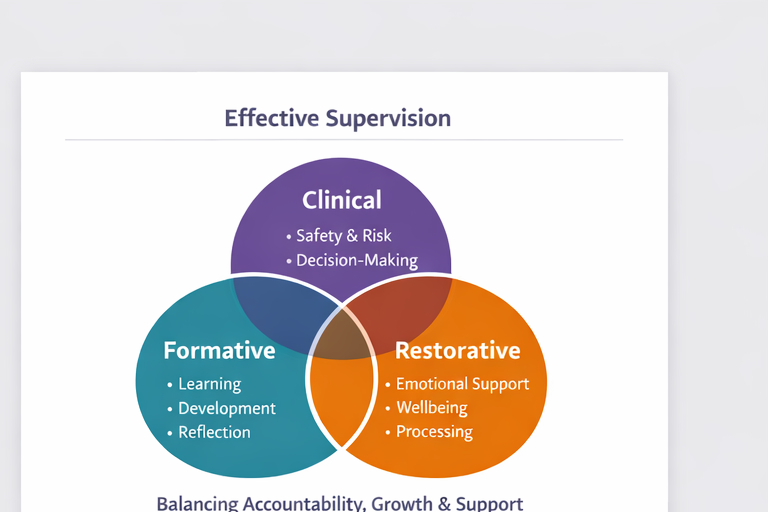
Using Clinical Supervision in a Trauma-Informed Way
To align with trauma-informed principles, clinical supervision should:
- be non-blaming and reflective, not purely audit-driven
- create a safe space for discussion, including uncertainty and mistakes
- balance accountability with support
- include space to consider emotional impact where relevant
- support learning and development, not just correction
4.4.4 Local Support
Organisations may also access external supervision and reflective practice support.
For example, The Cellar Trust provides psychological therapies and has experience supporting reflective practice and supervision for staff, helping individuals process experiences and develop coping strategies in a safe, professional space.
You can find more information about their services here:
https://www.thecellartrust.org/trust-therapies
4.4.3 Choice and Psychological Safety
Trauma-informed supervision is not only about frequency and quality—it is also about psychological safety. Where possible, organisations should consider offering staff a degree of choice regarding who provides reflective or restorative supervision. Some staff may feel more comfortable discussing emotional impact with an alternative supervisor, peer supervisor or external practitioner than with their direct line manager. Providing appropriate choice can strengthen trust, openness and honest reflection.
Local Insight – Staff Consultation
Participants consistently described supervision as most valuable when it provided space for reflection rather than focusing solely on operational updates or case management. Many felt they were better able to process the emotional impact of their work when supervision balanced accountability with support.
Several participants also highlighted the importance of choice, noting that some staff may feel more comfortable discussing emotional wellbeing with an alternative supervisor or external practitioner than with their direct line manager.
4.4.5 Supervision Key Message
Supervision is not just oversight — it is a core part of how organisations support staff wellbeing, maintain safe and effective practice, and sustain compassionate services. When delivered well, it provides a consistent space for reflection, support, and accountability; when absent or inconsistent, staff often report feeling unsupported, increasing the risk of stress, burnout, and reduced capacity to do their roles effectively.
Read more about supervision models here:
- Clinical supervision models for registered professionals, https://www.nhsemployers.org/articles/clinical-supervision-models-registered-professionals
- Health and Care Professionals Council (2022): The benefits of supervision – an employer’s perspective, https://www.hcpc-uk.org/employers/insights/2022/the-benefits-of-supervision—an-employers-perspective/
- Schiff (2019): PTSD Symptoms, Vicarious Traumatization, and Burnout in Front Line Workers in the Homeless Sector, https://link.springer.com/article/10.1007/s10597-018-00364-7
4.4.6. Restorative Conversations and conflict
Conflict is a normal part of working in emotionally demanding environments and, when handled appropriately, can strengthen relationships rather than damage them. A restorative approach does not focus on blame, but on understanding impact, rebuilding trust, and moving forward constructively.
This aligns with trauma-informed principles of safety, trust, and collaboration, and supports psychologically safe workplace cultures.
Conflict Prevention
Organisations and teams can reduce escalation by promoting:
- Clear communication and early conversations (“little repairs before big ruptures”)
- Psychological safety where staff feel able to raise concerns
- Reflective practice and emotional awareness
Staff can be supported to:
- Check assumptions before reacting
- Use “I” statements (e.g. “I felt…” rather than “You did…”)
- Seek clarification rather than proving a point
- Reflect on their own stress triggers and regulation before responding
When Conflict Arises
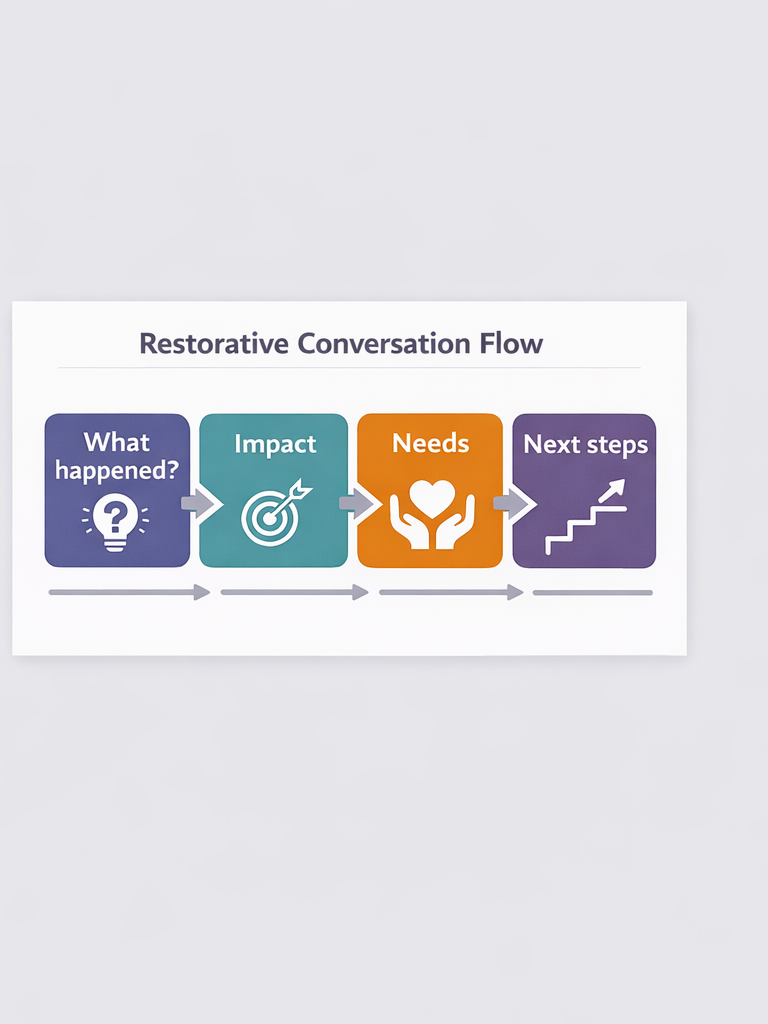
A simple restorative conversation model can be used:
- What happened? (Each perspective)
- What was the impact?
- What do you need now?
- What could be done differently next time?
Where appropriate, neutral facilitation by a manager, supervisor, or trained peer can support safe resolution.
4.5. Organisation-Level Support
This subsection outlines the organisational responsibilities for staff wellbeing, including leadership, supervision, policies, and culture. It is important because evidence shows that staff wellbeing cannot rely on personal resilience alone and must be embedded within systems, structures, and leadership practice.
Organisations hold the greatest responsibility in embedding trauma-informed wellbeing.
In line with the West Yorkshire Trauma-Informed Checklist, organisations should:
- Commit leadership support to trauma-informed workforce practice
- Provide ongoing supervision and training
- Review policies and procedures through a trauma-informed lens
- Offer opportunities for peer support and self-care
- Monitor wellbeing outcomes and adapt support accordingly
This includes:
- Clear workload expectations and realistic caseloads
- Access to wellbeing and occupational support services
- Flexible and compassionate working policies
- Recognition of emotional labour, not just performance outcomes
Leeds Mind’s trauma-informed employer guidance also highlights that culture, communication, and staff voice are central to creating a psychologically safe workplace.
→5. Embedding a Restorative Culture
This section describes how organisations can create a culture where wellbeing, reflection, and psychological safety are part of everyday practice. Embedding a restorative culture is important because one-off wellbeing activities are not sufficient without consistent leadership behaviours, supportive supervision, and open communication.
A restorative culture is shaped by leadership, communication, and everyday practice.
It is not created through one-off wellbeing initiatives, but through consistent behaviours, values, and systems that support staff on a daily basis.
In trauma-informed organisations, culture is experienced through how staff are treated, how decisions are made, and how safe people feel to speak openly about challenges. The Scottish Trauma Training Framework emphasises the importance of psychologically safe environments where staff feel trusted, supported, and able to reflect on the impact of their work. Staff should feel able to prioritise wellbeing, reflection, and recovery as part of their role, not in addition to it.
This includes:
Leaders modelling healthy boundaries and self-care
When leaders demonstrate realistic workloads, reflective practice, and healthy boundaries around availability, it gives staff permission to do the same and reduces a culture of overwork and presenteeism.
Normalising conversations about stress, recovery, and emotional impact
Working with clients, service users, and communities can be emotionally demanding. Creating a culture where these experiences can be discussed openly helps reduce stigma and supports early intervention rather than crisis response.
Encouraging reflective supervision rather than purely task-focused oversight
Supportive supervision that includes restorative elements (reflection, emotional processing, and support) aligns with trauma-informed practice and helps staff manage cumulative stress more effectively. For example, starting supervision with ‘How are you doing this week?’ before case discussion will offer space for reflection.
Creating safe spaces for staff voice and feedback
Staff should feel able to share concerns, ideas, and experiences without fear of judgement or negative consequences. Listening to staff voice is a key protective factor highlighted in the Listening Project and supports continuous improvement.
Recognising individuality, diversity, and lived experience
A restorative culture acknowledges that staff bring different identities, experiences, and needs into their roles. Inclusive, equitable, and culturally responsive approaches strengthen wellbeing and psychological safety across teams.
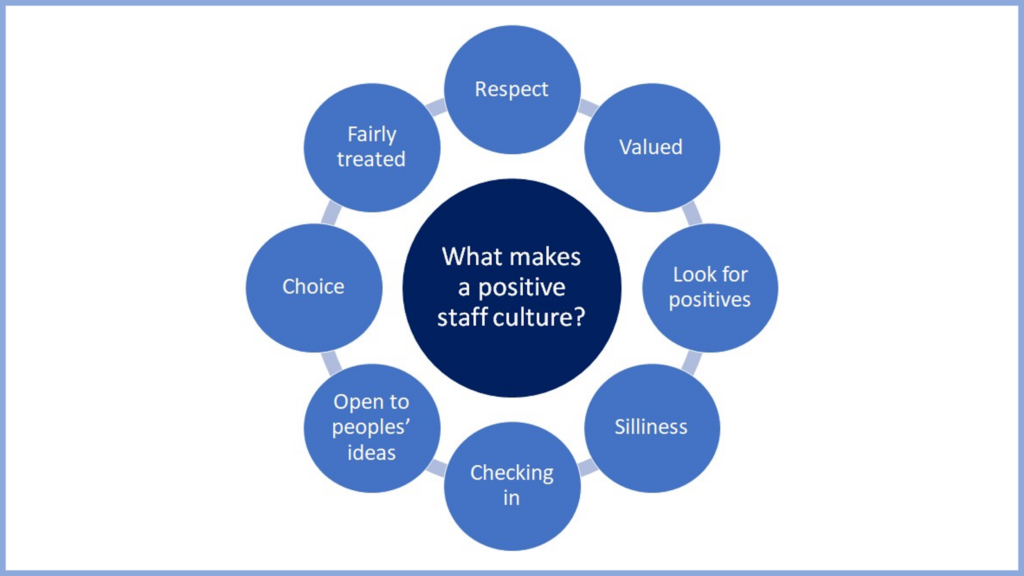
In addition, organisations can embed restorative culture through:
- Transparent communication and clear expectations
- Consistent and fair workload management
- Opportunities for peer support and team reflection
- Recognition and appreciation of staff contributions
- Policies that reflect compassion as well as accountability
Local Insight – Staff Consultation
Feeling recognised, listened to and appreciated was described as one of the simplest but most meaningful ways organisations could support staff wellbeing. Participants spoke about the importance of genuine recognition from managers and colleagues, alongside opportunities to celebrate successes as well as discuss challenges.
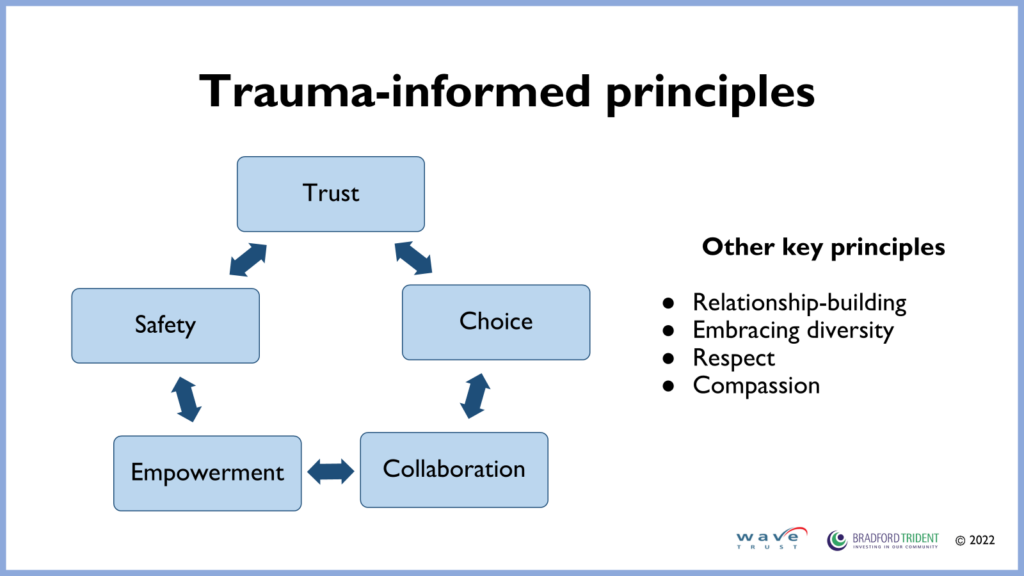
Trauma-informed culture aligns with principles of safety, trustworthiness, collaboration, choice, and empowerment. When staff feel listened to, respected, and supported, engagement, retention, and wellbeing improve, and services become more sustainable and relational in their approach.
5.1 Leadership and Shared Responsibility
Embedding restorative wellbeing is not solely the responsibility of individual staff. Trauma-informed frameworks, including the Scottish Trauma Training Framework and West Yorkshire Trauma-Informed Readiness guidance, emphasise that leadership and organisational systems must actively support staff wellbeing.
This means restorative approaches should be:
- Embedded within supervision structures
- Supported through leadership behaviours and policies
- Reflected in workload expectations and organisational culture
- Shared across teams rather than reliant on individual coping strategies
Leaders play a key role in modelling reflective practice, healthy boundaries, and compassionate communication. When organisations take collective responsibility for wellbeing, rather than presenting it as a personal resilience issue, staff are more likely to feel supported, psychologically safe, and able to sustain their work.
Incorporating restorative supervision, reflective spaces, and trauma-informed communication into everyday practice ensures these approaches are not optional suggestions, but embedded organisational standards that support both staff wellbeing and quality of care.
Local Insight – Staff Consultation
Participants emphasised that trauma-informed practice cannot rely on individual “champions”. While passionate individuals can initiate change, sustainable trauma-informed practice requires commitment across leadership, policies, supervision, workforce development and organisational culture. Relying on a small number of individuals risks burnout and limits long-term change.
Recognising and celebrating strengths
In many organisations, attention is often focused on targets, risk, and areas for improvement. While these are important, a consistent focus on what is not working can contribute to stress and reduce staff morale.
A restorative, trauma-informed approach also makes space to recognise what is going well. Acknowledging effort, progress, and positive practice helps staff feel valued and supported, and reinforces a sense of purpose in their work.
In practice, this can include:
- Highlighting positive work in supervision, not just challenges
- Building “what went well” into team meetings
- Recognising small wins and everyday efforts
- Providing regular, specific, and genuine feedback
- Celebrating team achievements, not just individual performance
These small, consistent actions help create a more balanced and supportive culture, where staff feel seen for their contributions as well as supported through challenges.
5.2 Supporting Managers
Managers play a key role in supporting staff wellbeing but also experience significant emotional demands themselves. Staff consultation highlighted that many managers want to support their teams but do not always feel equipped to have trauma-informed conversations or recognise signs of burnout and vicarious trauma. Organisations should ensure managers have access to training, reflective supervision and wellbeing support so they can confidently support others while maintaining their own wellbeing.
Local Insight – Staff Consultation
Managers were recognised as playing a vital role in staff wellbeing, but participants also acknowledged that managers themselves often need greater support. Many described wanting managers to have more training, reflective supervision and practical tools to help them hold supportive conversations and recognise signs of burnout or vicarious trauma.
5.3 Recognition and Feeling Valued
Feeling valued was the highest-rated contributor to staff wellbeing in the local survey, selected by 92% of respondents. Participants associated feeling valued with being listened to, trusted, recognised and appreciated by managers and colleagues.
Regular recognition, celebrating achievements, and acknowledging effort—not just outcomes—can strengthen morale, engagement and psychological safety
The local survey reinforces the importance of organisational culture. 81% of respondents identified supportive teams as important to wellbeing, while 79% highlighted flexibility and autonomy. These findings suggest that psychologically safe cultures are characterised by trust, collaboration and meaningful staff involvement.
→6. Trauma-Informed Organisations and System Change
This section explores how trauma-informed practice operates not only at an individual or team level, but across whole organisations and systems. It is important because sustainable staff wellbeing and trauma-informed care cannot be achieved through isolated interventions alone — they require cultural, relational, and systemic change.
Can Organisations Be Traumatised?
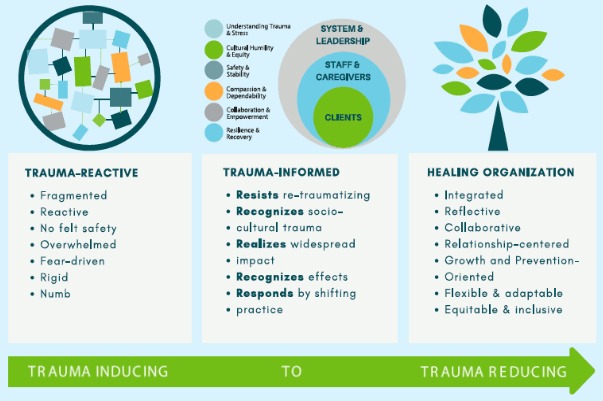
Emerging research suggests that organisations, like individuals, can experience the cumulative impact of stress, pressure, and unresolved challenges. Professor Vittoria Ardino’s (2014) work emphasises that trauma-informed practice extends beyond individual interventions and requires organisations to develop environments, cultures and systems that recognise the impact of trauma on both those receiving and delivering services.
The concept of organisational neuroception, drawing on the polyvagal theory by Stephen Porges, describes how individuals and groups continuously and often unconsciously assess whether their environment feels safe or threatening. In workplace settings, this means that staff are constantly responding not only to workload, but to tone, relationships, leadership behaviours, and organisational culture.
When systems are under sustained pressure, or when emotional impact is not processed, organisations may begin to show patterns such as:
- Reduced psychological safety
- Increased defensiveness or blame cultures
- Communication breakdown
- High staff turnover and burnout
- Reduced capacity for reflective practice
These are sometimes referred to as parallel processes, where the stress experienced by individuals is mirrored and reinforced at organisational level.
Trauma-informed organisations recognise these patterns and respond by prioritising safety, trust, reflection, and relational leadership.
Leaders play a key role in this by:
- Recognising signs of stress and threat within teams
- Modelling calm, consistent, and reflective behaviours
- Creating spaces where staff feel heard and supported
- Responding to challenges with curiosity rather than blame
This aligns closely with trauma-informed principles and reinforces that psychological safety is not an individual responsibility, but a collective organisational outcome.
Learning from Scotland’s Trauma-Informed Journey
Scotland’s national Trauma Transformation Programme provides a strong example of how trauma-informed practice can be implemented across complex systems.
A key learning from Scotland’s approach is that implementation is not linear. Organisations and systems vary in their readiness, capacity, and priorities, and therefore require flexible, context-specific approaches rather than a single prescriptive model.
The Roadmap for Trauma-Informed Practice supports organisations to:
- Reflect on their current position
- Identify strengths and gaps
- Take meaningful and realistic next steps
- Progress at a pace that is sustainable
Scotland’s approach also highlights the importance of collaboration and shared learning, particularly through structures such as the National Trauma Leads Network, which brings together local and national partners to:
- Strengthen strategic alignment
- Share learning and challenges
- Support consistent but flexible implementation
- Provide a collective voice for trauma-informed practice
For organisations, this means that embedding trauma-informed approaches is most effective when it is:
- supported at leadership level
- connected across teams and services
- informed by staff voice and lived experience
- continuously reviewed and adapted
Local Insight – Staff Consultation
Staff consultation highlighted that trauma-informed practice cannot rely on individual “champions”. While passionate individuals can help initiate change, participants felt that sustainable trauma-informed practice requires commitment across leadership, policies, supervision, workforce development and organisational culture. Relying on a small number of individuals risks burnout and limits long-term change.
Implementing Trauma-Informed Change Across Systems
Learning from Integrated Care Systems in England (e.g. Bristol, North Somerset, South Gloucestershire) demonstrates that trauma-informed change is most effective when it is coordinated across sectors, including:
- health services
- local authorities
- police and justice services
- housing
- voluntary and community organisations
Key lessons from this work include:
1. Organisational readiness matters
Not all organisations are at the same starting point. Understanding readiness helps ensure that approaches are realistic and sustainable.
2. Translation into practice is critical
Strategic commitments must be supported by practical changes in supervision, leadership, and everyday practice — otherwise they remain theoretical.
3. Cross-sector collaboration strengthens impact
Trauma-informed practice is most effective when there is alignment across systems, reducing fragmentation and improving consistency for both staff and service users.
4. Challenges are part of the process
Implementation often includes competing priorities, resource constraints, and cultural resistance. These should be expected and addressed through reflective, adaptive approaches.
5. Trauma-informed wellbeing should extend beyond paid staff to include volunteers, students and placement staff where appropriate, recognising that they may also experience emotionally demanding work and benefit from supervision, reflection and wellbeing support.
What This Means in Practice
For organisations working toward trauma-informed and restorative approaches, this means:
- Recognising that staff wellbeing is shaped by organisational systems, not just individual resilience
- Prioritising psychological safety as a core organisational outcome
- Embedding reflective supervision and restorative spaces across teams
- Supporting leaders to model trauma-informed behaviours
- Taking a flexible, staged approach to implementation
- Working collaboratively across teams and sectors
Ultimately, trauma-informed system change is about creating environments where both staff and service users experience safety, trust, and the opportunity to reflect and recover.
Organisations are not expected to achieve this immediately. Progress is most effective when it is reflective, collaborative, and responsive to staff experience.
→7. Vicarious Trauma, Burnout and Supporting Staff
This section outlines how exposure to trauma, sustained emotional labour, and workload pressures can impact staff, and how organisations can respond in a supportive, trauma-informed way.
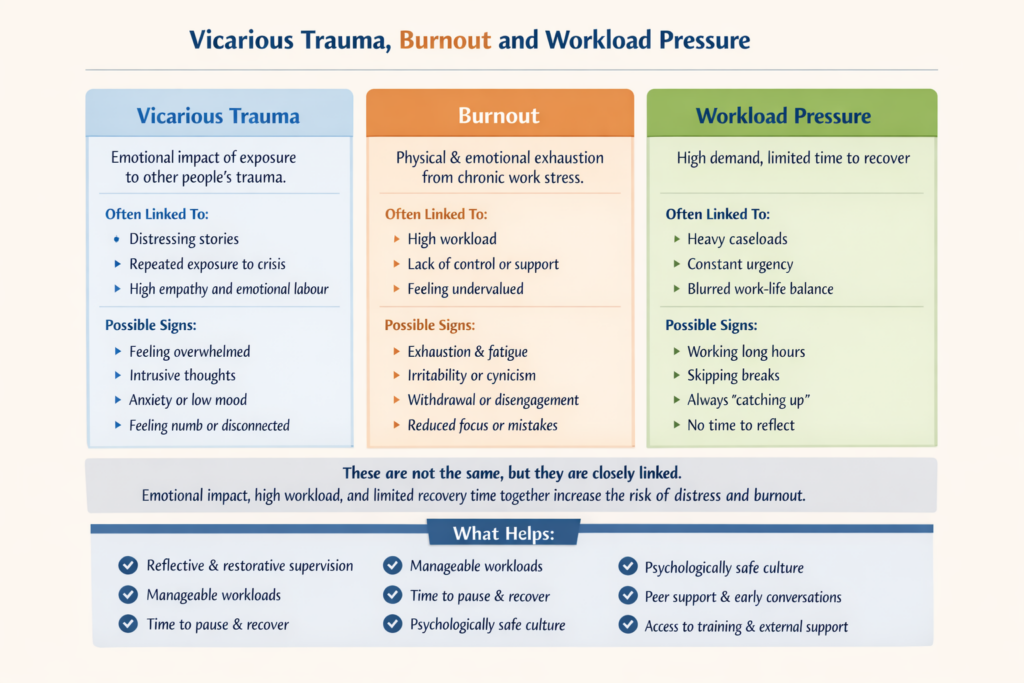
Many roles across health, social care, education, housing, and the voluntary sector involve regular exposure to distressing experiences. Over time, this can lead to vicarious trauma — the emotional and psychological impact of working with people who have experienced trauma.
Staff may also experience burnout, linked to prolonged stress, high workload, and organisational pressures. These experiences are closely connected and often occur together, particularly in frontline roles where emotional demand and capacity pressures intersect. Burnout is recognised by the World Health Organization as a syndrome resulting from chronic workplace stress that has not been successfully managed.
Importantly, these responses are not a sign of weakness. They are a natural response to the nature and conditions of the work, and require organisational as well as individual support.
Local Insight – Bradford Staff Wellbeing Survey
Emotional strain associated with trauma work was common across sectors. 55% of respondents reported personally experiencing signs of emotional strain or vicarious trauma, while a further 30% had observed these effects in colleagues. Frequently described experiences included emotional exhaustion, difficulty switching off, feeling overwhelmed and intrusive thoughts.
Understanding the Impact
- Vicarious trauma: emotional residue from exposure to others’ trauma through empathy
- Burnout: physical and emotional exhaustion linked to workload, pressure, and reduced job satisfaction
Both can:
- develop gradually over time
- be intensified by high demand or critical incidents
- affect wellbeing, performance, and relationships
In practice, staff are often managing both: emotional impact + workload pressure
Burnout is now widely recognised as an occupational issue, rather than an individual failing, reinforcing the importance of organisational responsibility.
Local Insight – Bradford Staff Wellbeing Survey
Participants consistently linked burnout with organisational factors rather than personal weakness. Open responses described increasing workloads, constant urgency, limited recovery time and difficulty maintaining boundaries as contributing to burnout.
Recognising the Signs
Staff may experience different but overlapping signs depending on whether they are experiencing vicarious trauma, burnout, or workload pressure.
Signs of Vicarious Trauma
- Feeling emotionally affected by the experiences of others
- Intrusive thoughts or images related to work
- Difficulty “switching off” or carrying work home
- Increased anxiety, hypervigilance, or low mood
- Feeling numb, detached, or reduced empathy
- Changes in sense of safety, trust, or worldview
Signs of Burnout
- Persistent exhaustion and low energy
- Reduced motivation or sense of purpose
- Irritability, frustration, or cynicism
- Feeling ineffective or questioning impact of work
- Difficulty concentrating or making decisions
- Withdrawal or disengagement from work
Signs of Being Overworked (Workload Pressure)
- Consistently working beyond contracted hours
- Skipping breaks or having no time to recover
- Feeling constantly under pressure or “catching up”
- High or unmanageable caseloads
- Limited time for reflection, supervision, or support
- Increased mistakes or reduced capacity to focus
These signs often overlap and may develop gradually over time, particularly where emotional impact and workload pressures are both present.
7.1 Recognising Workload Pressure
In addition to trauma exposure, staff may experience ongoing workload strain. Signs may include:
- Consistently high or unmanageable caseloads
- Limited time to reflect, recover, or take breaks
- Constant urgency and pressure to respond
- Blurred boundaries between work and personal time
These conditions can increase the risk of both vicarious trauma and burnout. Time for reflection, supervision, and recovery must be protected, not assumed.
Some further reading:
NHS England – Staff wellbeing guide
Practical organisational guidance on supporting staff wellbeing and preventing burnout.
https://www.england.nhs.uk/long-read/looking-after-your-teams-health-and-wellbeing-guide/
NHS – Work-related stress and burnout
Explains how sustained pressure leads to burnout and impacts behaviour, motivation, and performance. https://www.nhs.uk/every-mind-matters/lifes-challenges/work-related-stress/
NHS Employers – Beating burnout
Focuses on organisational responsibility and workforce-level interventions. https://www.nhsemployers.org/articles/beating-burnout-nhs
7.2 What Helps: Organisational Response
Supporting staff requires a proactive, systemic approach that addresses both emotional impact and working conditions.
Organisations can support staff by:
- Providing regular reflective and restorative supervision
- Creating safe spaces to process emotional impact
- Allowing time to pause and recover after high-impact work
- Ensuring manageable workloads and realistic expectations
- Recognising emotional labour as part of the role
- Encouraging peer support and shared reflection
- Offering access to training (e.g. trauma-informed practice, Mental Health First Aid)
- Creating a culture where staff feel able to raise concerns early
The Role of Supervision
Supervision is a key protective factor.
It should provide space to:
- reflect on emotional impact
- make sense of experiences
- identify support needs
- recognise strengths and positive practice
Without this, emotional impact can accumulate and increase the risk of burnout.
Local Insight – Staff Consultation
Participants described the emotional impact of their work as cumulative rather than linked to individual incidents. Many spoke about carrying difficult conversations home, feeling emotionally drained after supporting others, and needing protected time to reflect before moving on to the next task.
7.3 Supporting a Healthy Culture
A trauma-informed culture helps reduce risk by:
- Normalising conversations about emotional wellbeing
- Promoting psychological safety
- Avoiding blame and focusing on learning
- Recognising and celebrating positive practice
- Supporting early help-seeking
What Staff Can Do
Alongside organisational support, staff may benefit from:
- Using reflective tools (e.g. weekly prompts)
- Setting boundaries around workload and availability
- Taking breaks and allowing time to recover
- Seeking peer or supervisory support
- Accessing external support where needed
Key Message
Vicarious trauma, burnout, and workload pressure are not individual failings. They are often a response to the demands of the work and the conditions in which it is carried out.
A trauma-informed organisation recognises this and takes shared responsibility for supporting staff wellbeing.
7.4 Further Reading and Resources on Staff Wellbeing, Stress, and Burnout
NHS England – Staff wellbeing and support
https://www.england.nhs.uk/long-read/looking-after-your-teams-health-and-wellbeing-guide/
Trauma Research Foundation (Bruce Perry)
https://www.traumaresearchfoundation.org
PTSD UK – Understanding trauma and stress
https://www.ptsduk.org
Mind – Workplace mental health
https://www.mind.org.uk/workplace/
Living Well (Bradford) – Mental Health First Aid Training
https://mylivingwell.co.uk/academy/mental-health-first-aid/
Lancashire Violence Reduction Network – ACEs & trauma resources
https://lancsvrn.co.uk/wp-content/uploads/2021/01/ACEs-Online-Resources-Report-Lancs-VRN-UCLan-August-2020.pdf
NHS England – Staff wellbeing guide
https://www.england.nhs.uk/long-read/looking-after-your-teams-health-and-wellbeing-guide/
NHS – Work-related stress and burnout
https://www.nhs.uk/every-mind-matters/lifes-challenges/work-related-stress/
NHS Employers – Beating burnout
https://www.nhsemployers.org/articles/beating-burnout-nhs
World Health Organization (WHO) – Burnout definition
https://www.who.int/news/item/28-05-2019-burn-out-an-occupational-phenomenon-international-classification-of-diseases
Mental Health Foundation – Burnout overview
https://www.mentalhealth.org.uk/explore-mental-health/articles/burnout-signs-causes-and-ways-recover
Mental Health UK – Burnout explained
https://mentalhealth-uk.org/burnout/
→8. Tools & Templates
This section provides practical tools and structured approaches that organisations and teams can use to support staff wellbeing in a consistent and sustainable way. These tools are designed to be flexible and adaptable, and do not need to be used in full every time. They can be used within supervision, team meetings, and individual reflection.
In trauma-informed systems, tools should support proactive wellbeing, reflection, and emotional processing, rather than only responding when difficulties arise. Structured approaches help create predictability, clarity, and psychological safety, enabling staff to process the emotional impact of their work safely and consistently.
Providing practical tools also helps move organisations from intention to implementation — ensuring that wellbeing support is embedded in everyday practice, rather than dependent on individual managers or informal approaches.
Local Insight – Bradford Staff Wellbeing Survey
Protected time for reflection, supervision and recovery emerged as a consistent theme within the local survey. Staff described wellbeing support as difficult to access when workloads prevented them from taking time to pause, reflect or recover.
Local Insight – Staff Consultation
Staff consistently asked for practical resources that could be used in everyday practice rather than additional theory alone. Suggested resources included reflective prompts, supervision templates, conversation guides, team exercises, refresher learning and accessible online materials to support ongoing implementation.
8.1 Types of Tools
Organisations may consider using a range of tools to support different aspects of staff wellbeing:
Personalised wellbeing plans
These help staff recognise early signs of stress or burnout and identify strategies that support regulation, boundaries, and recovery.
https://learn.nes.nhs.scot/30741/psychosocial-mental-health-and-wellbeing-support/taking-care-of-myself/wellbeing-planning-tool
Reflective supervision frameworks
Structured supervision models (such as restorative or Proctor-informed supervision) ensure that sessions include emotional reflection, learning, and wellbeing alongside operational discussion.
Supervision should provide space to reflect not only on challenges, but also on what is working well, recognising strengths and reinforcing positive practice.
https://www.hee.nhs.uk/sites/default/files/documents/Transformative%20Reflection%20Resource%20Guide%20FINAL.pdf
Weekly reflection prompts
Simple prompts support ongoing self-awareness and help staff process emotional impact rather than carrying it cumulatively.
Team wellbeing practices
Short check-ins or reflective discussions within meetings help normalise conversations about emotional workload and create shared responsibility for wellbeing.
Staff Wellbeing & Self-Care in a Crisis (Captioned) | Videos & Movies on Vimeo
Manager conversation guides
These support consistent, compassionate conversations about workload, wellbeing, and sustainability, rather than focusing solely on performance or targets.
https://www.england.nhs.uk/long-read/looking-after-your-teams-health-and-wellbeing-guide/
8.2 Additional Tools Organisations May Consider
- Structured debrief frameworks after difficult cases or incidents
- Wellbeing self-assessment checklists
- Digital boundary agreements (e.g. response expectations and communication norms)
- Restorative conversation prompts for workplace tensions
- Staff feedback tools and pulse surveys to monitor wellbeing trends
When embedded effectively, these tools support a culture of reflection, early support, and continuous learning, strengthening both staff wellbeing and quality of care.
8.3 Practical Examples
Putting restorative wellbeing into practice does not require organisations to start from scratch. Small, consistent changes to supervision, team meetings, leadership conversations and reflective practice can make a meaningful difference to staff wellbeing over time.
The examples and templates in this section are designed to help organisations translate trauma-informed and restorative principles into everyday practice. They are intended to be flexible, adaptable, and used alongside existing policies, supervision structures and wellbeing initiatives, rather than creating additional work.
The tools can be used by individuals, managers and organisations to support reflection, supervision, team wellbeing and continuous improvement. Organisations are encouraged to adapt them to suit their own context, workforce and ways of working.
Downloadable Tools
A downloadable version of these tools is available to support implementation within teams and organisations, allowing them to be used, adapted and shared across services.
1. Weekly Reflection Prompt
Use individually or within supervision.
- What went well this week?
- What drained my energy this week?
- What helped me feel supported?
- What am I carrying that I need to process?
- What would help me feel more supported next week?
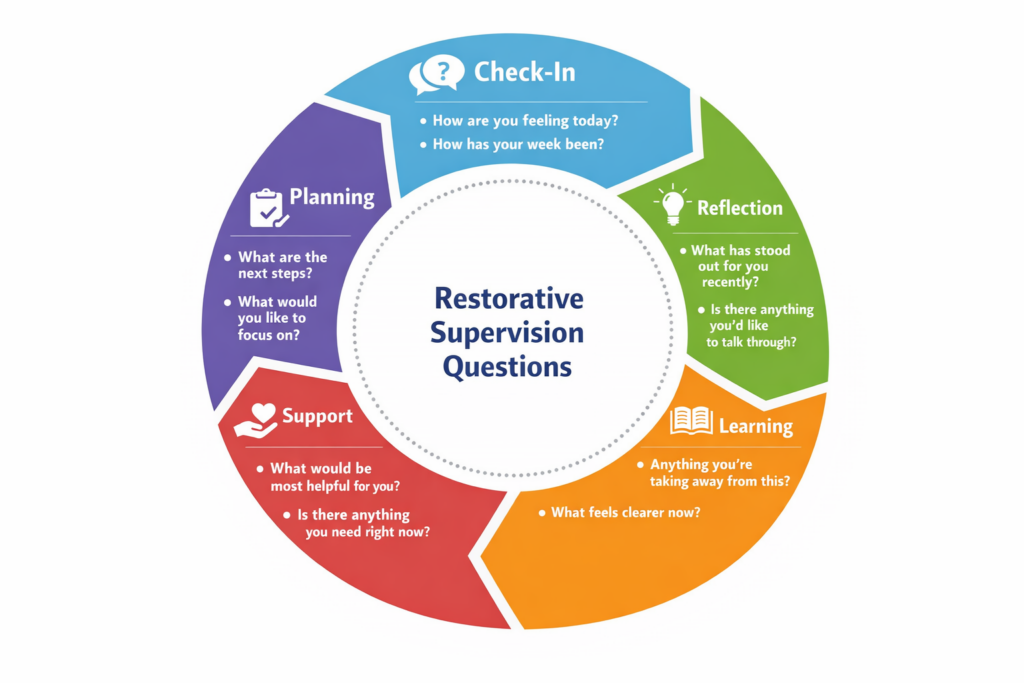
2. Restorative Supervision Structure
Suggested structure for a 30–60 minute session.
This structure supports conversations that include emotional reflection, learning, support, and planning alongside operational discussion.
1. Check-in questions
- How are you feeling today?
- How has your week been?
- Is there anything you’d like to share about how things are going for you?
2. Reflection questions
- Is there anything from your work that has stayed with you?
- Has anything felt particularly challenging or important recently?
- What has stood out for you recently in your work?
- Is there anything you’d like to talk through?
- Is there anything that has gone well or felt positive?
3. Learning questions
- Is there anything you’re taking away from this conversation?
- Has anything helped you see things differently?
- What feels clearer for you now?
- Is there anything you’d like to do differently going forward?
- Is there anything from this that you feel proud of or would like to build on?
4. Support questions
- What would feel most helpful for you right now?
- Is there anything you need more or less of at the moment?
- How can I best support you?
- Would it help to think about practical, emotional, or team support?
- Is there anything that would make your workload feel more manageable?
- Do you need time, space, or follow-up support after this?
5. Planning questions
- What would feel like a helpful next step?
- Is there anything we’ve discussed that you’d like to take forward?
- What support or follow-up would be useful after this session?
- What would you like to focus on?
- Shall we agree any small, manageable actions?
- Is there anything we should revisit next time?
3. Team Wellbeing Check-In
A short (5–10 minute) exercise for team meetings
- One word for how you’re feeling today
- One challenge this week
- One thing that helped
Optional:
- What do we need as a team this week?
This helps normalise wellbeing conversations and build shared understanding within teams.
4. Learning from others (‘Magpie exercise)
Purpose
To encourage teams to share good practice and learn/ ‘steal’ good practice from one another.
Questions:
- What’s one thing you’ve seen another colleague do that you’d like to try?
- What’s one piece of good practice you’ve “magpied” recently?
- What have we learned from another team or organisation?
5. Post-Incident Debrief (Restorative Approach)
To support staff after a difficult case or incident.
- What happened?
- What was the impact on you?
- What do you need now?
- What would help going forward?
This approach focuses on support, reflection, and recovery, rather than blame.
6. Team Recognition Prompt
Use at the end of team meetings or supervision.
Take two or three minutes to celebrate progress and acknowledge positive contributions.
Example prompts:
- What has gone well this week?
- Who would you like to recognise or thank today?
- What achievement—big or small—should we celebrate?
- What are you proud of as a team this week?
- What strengths have we seen in each other?
Why?
Feeling valued was the strongest contributor to staff wellbeing identified in the Bradford Staff Wellbeing Survey, with 92% of respondents selecting it as an important protective factor. Regular recognition helps build psychological safety, improve morale and reinforce positive team culture.
7. Keep it- Fix it- Ditch it
A simple reflective exercise for teams.
Keep It
What currently supports our wellbeing that we should continue?
Fix It
What has potential but could work better?
Ditch It
What no longer helps us or creates unnecessary stress?
Use during:
- team away days
- reflective meetings
- service development
- wellbeing reviews
8.4 Further Reading
- Trauma Research Foundation (Bruce Perry – Regulate, Relate, Reason):
https://www.traumaresearchfoundation.org - NHS England – Staff wellbeing and support guidance:
https://www.england.nhs.uk/long-read/looking-after-your-teams-health-and-wellbeing-guide/ - Health Education England – Reflective Practice Guide:
https://www.hee.nhs.uk/sites/default/files/documents/Transformative%20Reflection%20Resource%20Guide%20FINAL.pdf - National Trauma Training Programme (Scotland):
https://www.gov.scot/publications/transforming-psychological-trauma-framework/ - West Yorkshire Trauma-Informed Programme:
https://www.wypartnership.co.uk/our-priorities/trauma-informed - Leeds Mind – Trauma-Informed Employer:
https://www.leedsmind.org.uk/mindful-employer-how-to-become-trauma-informed/
→9. Crisis Response
This section outlines how organisations can respond supportively when staff experience high stress, burnout, or the impact of difficult work. A trauma-informed crisis response is essential because it focuses on support, reflection, and recovery, rather than blame, recognising the cumulative impact of emotionally demanding roles.
In trauma-informed organisations, staff distress is understood as a response to sustained pressure, emotional labour, or lack of opportunity to process experiences, not as individual weakness or failure.
How organisations respond in these moments has a significant impact on:
- staff wellbeing and recovery
- psychological safety
- retention and morale
- long-term organisational culture
Local Insight – Bradford Staff Wellbeing Survey
Survey participants emphasised the importance of follow-up support after emotionally demanding work. Staff highlighted that recovery often requires continued supervision, temporary workload adjustments, peer support and opportunities to reflect—not simply an immediate debrief.
Key Principles of a Trauma-Informed Crisis Response
A supportive response should be:
- Immediate and responsive – support is offered early, not delayed
- Non-blaming and non-judgemental – focus on understanding, not fault
- Relational – prioritising human connection and being heard
- Flexible and individualised – recognising different needs and responses
- Restorative – supporting reflection, recovery, and learning
Practical Organisational Responses
Organisations can support staff in crisis through a combination of immediate, short-term, and ongoing actions.
Immediate Support (First response)
- Provide time and space to pause and regulate after a difficult incident
- Offer a supportive check-in (not performance-focused)
- Ensure the staff member is not expected to continue high-pressure work immediately
- Acknowledge the impact of the situation and validate emotional responses
Even small actions (e.g. “take a break”, “let’s check in later”) can significantly reduce distress
Short-Term Support
- Offer a restorative, non-blaming debrief
- Adjust workload or expectations temporarily
- Provide access to supervision or reflective space
- Offer practical support (e.g. flexibility, time off, reduced caseload)
- Encourage connection with peers or trusted colleagues
Ongoing Support and Recovery
- Follow up regularly — do not assume recovery after one conversation
- Support reintegration after time off or burnout
- Maintain access to reflective supervision
- Review whether organisational factors contributed to the situation
- Use learning to improve systems, not assign blame
Example: Restorative Debrief in Practice
A simple trauma-informed debrief structure:
- What happened?
- What was the impact on you?
- What do you need now?
- What would help going forward?
This approach prioritises support, understanding, and recovery, rather than investigation or fault-finding.
Supporting Staff After Burnout or Leave
Returning to work after burnout or high stress requires careful and supportive planning.
Organisations should consider:
- A phased return to work, where possible
- Reduced or adjusted workload initially
- Clear and realistic expectations
- Regular supportive check-ins
- Avoiding immediate exposure to high-risk or high-stress work
A trauma-informed approach recognises that recovery takes time, and that pressure to “return to normal” too quickly can increase the risk of relapse.
Crisis Prevention Through Culture
While crisis response is important, organisations should also recognise that many crises are preventable.
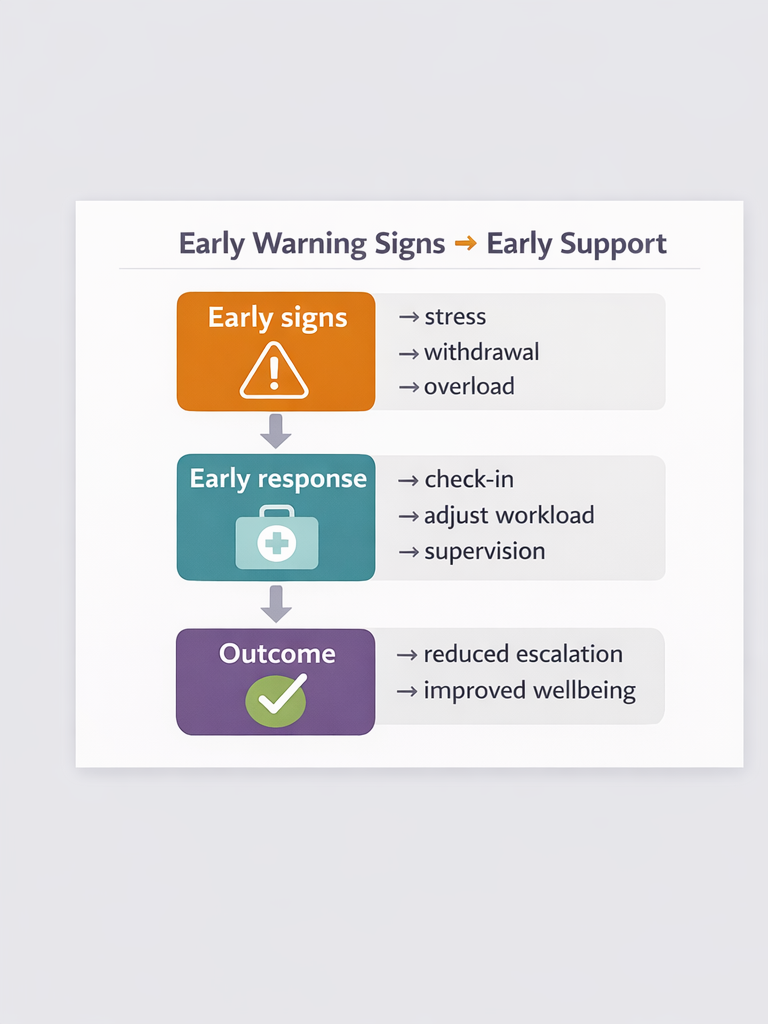
Early indicators may include:
- Increased stress or emotional exhaustion
- Withdrawal or reduced engagement
- Increased errors or reduced concentration
- Changes in behaviour or communication
Training such as Mental Health First Aid can support staff and managers to recognise early signs of distress and respond confidently and appropriately.
Creating a culture where staff feel able to raise concerns early is one of the most effective ways to prevent crisis escalation.
Conflict and Workplace Tension
Conflict should be approached using restorative principles, focusing on:
- understanding impact
- repairing relationships
- learning and moving forward
Rather than blame or escalation, restorative approaches support:
- psychological safety
- trust within teams
- healthier communication
Tools to Support Crisis Response
Organisations may consider:
- Crisis response protocols for staff wellbeing
- Structured debrief templates
- Wellbeing checklists or early warning tools
- Manager guidance for responding to distress
- Access to peer support or reflective spaces
- Access to Mental Health First Aid (MHFA) training to build staff confidence in recognising and responding to distress https://mylivingwell.co.uk/academy/mental-health-first-aid/
Local Insight – Staff Consultation
Participants highlighted that embedding trauma-informed practice is an ongoing process rather than a one-off training event. They valued opportunities for peer learning, leadership development, refresher sessions, practical resources and continued access to supportive networks.
Further Reading and Resources
NHS England – Staff wellbeing and support
https://www.england.nhs.uk/long-read/looking-after-your-teams-health-and-wellbeing-guide/
Health Education England – Reflective Practice Guide
https://www.hee.nhs.uk/sites/default/files/documents/Transformative%20Reflection%20Resource%20Guide%20FINAL.pdf
Trauma Research Foundation (Bruce Perry – Regulation and stress response)
https://www.traumaresearchfoundation.org
Mind – Workplace wellbeing and mental health support
https://www.mind.org.uk/workplace/
Samaritans – Support for emotional distress
https://www.samaritans.org
Shout (text support service)
https://giveusashout.org
NES Scotland – Staff wellbeing and self-care resources
https://learn.nes.nhs.scot
Staff Wellbeing & Self-Care in a Crisis (Video)
https://vimeo.com/866001231
→10. Measuring Impact
This section outlines how organisations can monitor and evaluate staff wellbeing and the effectiveness of restorative approaches. Measuring impact is important to ensure that wellbeing initiatives are meaningful, responsive, and continuously improved, based on staff feedback and lived workforce experience.
In trauma-informed systems, measurement should focus on learning, reflection, and improvement, rather than performance management or blame. The aim is not to “measure wellbeing perfectly”, but to understand what is helping, what is not, and where support is needed. Supporting staff wellbeing is linked to improved retention, reduced sickness absence, and better outcomes for clients, service users, and communities.
Local Insight – Bradford Staff Wellbeing Survey
Organisations should routinely seek staff feedback to understand how wellbeing is experienced in practice. Alongside measures such as sickness absence and retention, regular wellbeing surveys can help identify trends in psychological safety, workload, supervision, team culture and emotional wellbeing. Repeating surveys over time enables organisations to evaluate progress and ensure improvement efforts remain responsive to staff experience.
Principles of Trauma-Informed Measurement
Approaches to measuring staff wellbeing should be:
- Proportionate – not overly burdensome or time-consuming
- Meaningful – focused on real staff experience, not just metrics
- Safe – allowing honest feedback without fear of judgement
- Reflective – supporting learning and improvement
- Collaborative – involving staff voice in shaping responses
What to Measure
A combination of qualitative and quantitative insights provides the most useful picture.
Quantitative indicators (what is happening)
- Staff wellbeing surveys and pulse checks
- Sickness absence and stress-related leave
- Staff turnover and retention
- Use of supervision and wellbeing support
- Engagement with wellbeing initiatives (e.g. training, tools, sessions)
Qualitative insights (what it feels like)
- Staff voice and lived experience feedback
- Themes emerging from supervision and reflective practice
- Feedback from team discussions and check-ins
- Open survey responses and focus groups
These insights are often the most valuable, as they help explain why trends are happening.
Practical Ways to Measure Wellbeing
Organisations do not need complex systems to begin measuring impact. Simple, consistent approaches can be highly effective.
1. Regular Pulse Surveys
Short, focused surveys (e.g. 3–5 questions) to track changes over time.
Example questions:
- I feel supported in my role
- I have opportunities to reflect on my work
- I feel able to raise concerns safely
2. Supervision Insights
Use supervision not only for support, but also to identify themes:
- Are staff reporting high emotional impact?
- Is workload coming up repeatedly?
- Are reflective spaces being used?
3. Team Check-Ins
Use regular team meetings to gather informal feedback:
- What’s working well?
- What’s feeling challenging?
- What support do we need?
4. Organisational Feedback Loops
Create simple ways for staff to share feedback safely:
- Anonymous forms
- QR code feedback tools
- Suggestion boxes or digital equivalents
5. Reviewing Existing Data
Organisations often already hold useful data:
- HR data (absence, turnover)
- Exit interviews
- Staff surveys
The key is to interpret this through a wellbeing and trauma-informed lens, not just performance.
Using the Information
Collecting data is only helpful if it leads to action.
Organisations should:
- Share findings with staff (transparency builds trust)
- Identify small, realistic changes
- Review what is working and adapt where needed
- Celebrate improvements and positive practice
The West Yorkshire Trauma-Informed Readiness guidance highlights the importance of monitoring progress, recognising success, and learning from challenges as part of continuous improvement.
Measuring What Matters
It is important to recognise that not all aspects of wellbeing can be easily measured.
Indicators such as:
- feeling valued
- psychological safety
- team culture
- quality of supervision
may not always be captured through numbers, but are critical to staff wellbeing.
For this reason, staff voice and lived experience should remain central to any evaluation approach.
What to Avoid
- Over-reliance on metrics without understanding context
- Using wellbeing data for performance management or blame
- Collecting data without acting on it
- Over-surveying staff, leading to fatigue
Measuring Staff Wellbeing: Quick Checklist
Organisations do not need complex systems to begin understanding staff wellbeing. This simple approach can support ongoing reflection and improvement.
1. Ask regularly
- Use short pulse surveys or informal check-ins
- Create safe opportunities for staff to share feedback
2. Listen for themes
- What is coming up repeatedly (e.g. workload, emotional impact)?
- Are staff able to access reflection and support?
3. Review existing data
- Sickness absence (especially stress-related)
- Staff turnover and retention
- Supervision uptake and engagement
4. Act on feedback
- Identify one or two realistic changes
- Communicate what has been heard and what will change
5. Review and adapt
- Check whether changes have made a difference
- Continue the cycle of listening and responding
6. Celebrate what is working
- Acknowledge improvements and positive practice
- Recognise staff contributions and team strengths
Measuring wellbeing is not about collecting more data — it is about understanding staff experience and using this to create meaningful, supportive change.
Further Reading and Resources
NHS England – Looking after your team’s health and wellbeing
https://www.england.nhs.uk/long-read/looking-after-your-teams-health-and-wellbeing-guide/
West Yorkshire Trauma-Informed Readiness Checklist
https://www.wypartnership.co.uk/our-priorities/trauma-informed
Health Education England – Reflective Practice Guide
https://www.hee.nhs.uk/sites/default/files/documents/Transformative%20Reflection%20Resource%20Guide%20FINAL.pdf
Leeds Mind – Trauma-Informed Employer Guidance
https://www.leedsmind.org.uk/mindful-employer-how-to-become-trauma-informed/
→11. Trauma-Informed Use of Technology
This section considers how digital communication and technology affect staff wellbeing and emotional workload. As digital tools are now embedded in everyday practice, trauma-informed approaches recognise that how technology is used can significantly influence stress, control, and psychological safety.
Digital environments are an extension of the workplace. Emails, case systems, messaging platforms, and virtual interactions can:
- increase emotional pressure and immediacy
- reduce a sense of control and predictability
- blur boundaries between work and personal time
- contribute to cumulative stress and emotional fatigue
Trauma-informed guidance highlights that harm is often shaped not by technology itself, but by expectations, pace, and communication practices.
Key Considerations for Practice
Organisations can support staff by:
- Setting clear expectations around response times and availability
- Establishing digital boundaries (e.g. limiting out-of-hours communication)
- Avoiding sending or expecting responses to emotionally sensitive information without support
- Providing space in supervision to reflect on difficult digital interactions
- Recognising digital emotional labour as part of the role
Supporting Control and Psychological Safety
Control and agency are central to trauma-informed practice. Receiving unexpected or emotionally heavy information without time to process can increase stress and overwhelm.
Simple actions can reduce this impact:
- giving staff time to pause before responding
- prioritising important communication
- encouraging use of boundaries and “switch-off” practices
- ensuring staff feel able to say when digital demands are unmanageable
Quick Digital Boundaries Checklist
Small changes in digital practice can significantly reduce stress and improve wellbeing.
Managers and teams can consider:
- Agree clear expectations for response times (e.g. not all messages require immediate replies)
- Avoid sending emails or messages out of hours, or use delayed send where possible
- Be mindful when sharing emotionally sensitive information digitally — consider timing and support
- Encourage staff to take breaks from screens and notifications
- Create shared agreements around availability and “switch-off” time
- Avoid overloading staff with multiple communication channels
- Use subject lines or flags to prioritise urgent vs non-urgent communication
- Check in with staff about how digital demands are affecting them
- Model healthy boundaries as a leader (e.g. not expecting immediate replies)
Even small changes in communication practices can improve predictability, reduce pressure, and support psychological safety.
Further Reading
West Yorkshire Digital Programme
https://www.wypartnership.co.uk/our-priorities/digital
West Yorkshire Digital Strategy (overview)
https://www.wypartnership.co.uk/application/files/4316/5884/7911/WY_Digital_Strategy_on_a_Page_Jan22.pdf
→12. Resources
This section signposts relevant resources, partnerships, and tools to support the ongoing implementation of trauma-informed and restorative approaches to staff wellbeing.
Restorative wellbeing is not a one-off intervention — it requires continuous learning, reflection, and collaboration. Access to external resources helps organisations strengthen internal practice and ensures staff are not working in isolation.
Local (Bradford & West Yorkshire)
Adversity, Trauma and Resilience (ATR) Workforce Development Project (Bradford Trident)
Training, tools, and resources to support trauma-informed practice across Bradford.
https://bradfordtrident.co.uk
ATR Bradford Staff Wellbeing & Reflective Practice Survey (2026)
This guide has been informed by local workforce experiences gathered across health, education, local authority and voluntary sector organisations within Bradford.
ATR Signposting Resource (Bradford Trident)
A curated list of local services and support options for staff and organisations.
https://bradfordtrident.co.uk/directory/
Bradford District Talking Therapies (NHS)
Free, confidential support for stress, anxiety, and emotional wellbeing (self-referral available).
https://www.bdctalkingtherapies.nhs.uk
https://www.bdctalkingtherapies.nhs.uk/knowledge-bank/
Living Well (Bradford)
Workplace wellbeing support and guidance, including Mental Health First Aid training for staff.
https://mylivingwell.co.uk/workplaces/news-post/healthy-working-life/
https://mylivingwell.co.uk/academy/mental-health-first-aid/
West Yorkshire Trauma-Informed Programme
Regional programme supporting trauma-informed systems and workforce development.
https://www.wypartnership.co.uk/our-priorities/trauma-informed
West Yorkshire Digital Programme
Guidance on digital transformation and its impact on workforce and systems.
https://www.wypartnership.co.uk/our-priorities/digital
Organisational Development & Trauma-Informed Practice
Leeds Mind – Trauma-Informed Employer Network
Support and guidance for organisations working toward trauma-informed practice.
https://www.leedsmind.org.uk/mindful-employer-how-to-become-trauma-informed/
Scottish Trauma Training Programme (NTTP)
National framework and resources for trauma-informed practice implementation.
https://www.gov.scot/publications/transforming-psychological-trauma-framework/
West Yorkshire Trauma-Informed Readiness & Resources
Tools to support organisations in assessing and developing trauma-informed approaches.
https://www.wypartnership.co.uk/publications/other-publications
Center for Health Care Strategies – Trauma-Informed Systems
Case studies and system-level approaches to embedding trauma-informed care.
https://www.chcs.org/resource/shepherding-a-movement-to-address-toxic-stress-for-youth-in-san-francisco-and-beyond-center-for-youth-wellness/
Supervision, Reflection & Workforce Support
NHS England – Staff Wellbeing Guidance
Practical guidance for leaders and organisations on supporting staff wellbeing.
https://www.england.nhs.uk/long-read/looking-after-your-teams-health-and-wellbeing-guide/
Health Education England – Reflective Practice Guide
Structured approaches to reflective supervision and learning.
https://www.hee.nhs.uk/sites/default/files/documents/Transformative%20Reflection%20Resource%20Guide%20FINAL.pdf
Good Wellbeing Conversation Guide (Managers)
Practical support for having supportive, structured conversations with staff.
https://www.bolton.gov.uk/downloads/file/4282/good-wellbeing-conversation-guide-for-managers
Restorative Approaches (Mediation NI)
Guidance on restorative conversations and relationship-based approaches.
https://mediationni.org/restorative-approaches-for-schools-workplaces-and-communities/
Wellbeing Tools & Practical Resources
NES Scotland – Wellbeing Planning Tool
Supports staff to identify stress triggers and protective strategies.
https://learn.nes.nhs.scot/30741/psychosocial-mental-health-and-wellbeing-support/taking-care-of-myself/wellbeing-planning-tool
Mind – Workplace Wellbeing Resources
Guidance and tools for supporting mental health at work.
https://www.mind.org.uk/workplace/
Mind – Trauma-Informed Physical Activity Resource
Explores how wellbeing and movement can be trauma-informed.
https://www.mind.org.uk/about-us/our-policy-work/sport-physical-activity-and-mental-health/resources/trauma-informed-physical-activity/
Wellbeing Activities Guide (Mind)
Practical ideas for supporting wellbeing in teams and organisations.
https://mind.turtl.co/story/wellbeing-activities/page/1
Future Action – Measuring Impact
Tools and insights on measuring social impact and outcomes.
https://www.futureaction.net/impact
Digital Wellbeing & Systems
West Yorkshire Digital Strategy (Overview)
Summary of regional digital priorities and system-level approach.
https://www.wypartnership.co.uk/application/files/4316/5884/7911/WY_Digital_Strategy_on_a_Page_Jan22.pdf
Emotional Support (Staff Support Services)
NHS Talking Therapies (England)
National access point for mental health support services.
https://www.nhs.uk/service-search/mental-health/find-an-NHS-talking-therapies-service/
Samaritans (24/7 support)
Confidential emotional support.
116 123
https://www.samaritans.org
Shout (text support service)
Free, confidential text-based mental health support.
https://giveusashout.org
Using These Resources
This is not an exhaustive list. Organisations are encouraged to continue building local partnerships and identifying resources that reflect the needs of their workforce.
As this work continues to develop, we welcome ongoing input and shared learning. If you would like to suggest additional resources or approaches to include in future updates, please contact:
atrproject@bradfordtrident.co.uk
Organisations may use these resources to:
- Support staff wellbeing and access to external help
- Strengthen supervision, leadership, and reflective practice
- Inform organisational development and training
- Complement internal wellbeing policies and approaches
→In a nutshell: 10 Actions Every Organisation Can Take
✔ Protect time for supervision and reflection
✔ Review workload regularly
✔ Include wellbeing in every supervision conversation
✔ Recognise and celebrate staff achievements
✔ Create opportunities for peer support
✔ Develop psychologically safe teams
✔ Introduce restorative debriefs after difficult work
✔ Agree digital communication boundaries
✔ Train managers in trauma-informed leadership
✔ Measure staff wellbeing and learn from staff feedback
→Implementation Roadmap
Beginning your journey
- Start team check-ins
- Review supervision
- Ask staff what matters
Developing practice
- Train managers
- Introduce restorative supervision
- Create wellbeing plans
Embedding culture
- Measure wellbeing annually
- Celebrate success
- Review policies
- Co-produce improvements
A Flexible and Trauma-Informed Approach
Organisations are not expected to implement everything at once.
They may:
start with one section or tool
adapt tools to suit their context
build on existing good practice
A trauma-informed approach emphasises progress over perfection, recognising that sustainable change takes time.
Important Note
This guide is intended to support reflection, learning, and improvement.
It should not be used as a performance or compliance tool, but as a way to create safer, more supportive environments for staff.
To download this guide, kindly click the link Restorative Wellbeing Guide
Co-Production and Local Relevance
A trauma-informed approach recognises that staff wellbeing is strengthened through both internal support and access to wider systems of care and learning.
This guide has been informed by engagement with local professionals and is designed to reflect real workforce experience across Bradford.
Ongoing collaboration is encouraged to ensure the guide remains relevant and responsive.
If you have examples of good practice, additional resources, or suggestions for future editions, we’d love to hear from you.
atrproject@bradfordtrident.co.uk
Help Us Improve This Guide
This guide is intended to be a living resource, evolving alongside local learning, emerging evidence, and the experiences of the workforce across Bradford.
It has been developed through co-production, bringing together national evidence, local partnerships, the voices of professionals through our Bradford Staff Wellbeing & Reflective Practice Survey, and insights from our multi-agency staff consultation. As restorative wellbeing continues to develop, we want this guide to grow with it.
We welcome:
- Examples of good practice from your organisation
- Feedback on how you’ve used this guide
- Suggestions for new tools, templates or resources
- Ideas for future topics or improvements
- Local case studies and examples of restorative approaches in action
Your feedback will help ensure this guide remains relevant, practical and reflective of the needs of Bradford’s workforce.
Help us improve this guide by completing our short 3-minute evaluation.
If you would like to contribute, share your experiences or suggest improvements, please contact us:
atrproject@bradfordtrident.co.uk
Acknowledgements
Thank you to everyone who has contributed to the development of this guide. Together, we can continue to build healthier, more compassionate and trauma-informed workplaces that support both staff wellbeing and better outcomes for the people and communities we serve.
This guide has been developed as part of the Adversity, Trauma & Resilience (ATR) Workforce Development Project, delivered by Bradford Trident and funded by Public Health Bradford.
It has been informed by national evidence, local partnership working, the Bradford Staff Wellbeing & Reflective Practice Survey, and a multi-agency staff consultation, alongside the expertise and experiences of professionals working across Bradford.
Lead author and resource development:
Dr Ioanna Filippidi, Project Lead, and the Adversity, Trauma & Resilience (ATR) Workforce Development Project Team